What We Built in 2025
Explore everything August built in 2025: new AI features, enhanced workflows, and product updates that transformed legal practice.


Share on:
In January 2025, we were three people and a different name. The company was called Vecflow. We had a product that worked, customers who believed in us, and a conviction that legal AI needed to be built differently.
Twelve months later, August is over 20 people. We raised from incredible partners at NEA, Pear VC, Stanford Law School, and angels at Ramp, Bain Capital Ventures, and OpenAI. Grew revenue into the millions and built one of the most energized teams in legal AI.
We serve law firms and legal teams on four continents, including some of the most innovative firms in the United States, Canada, Australia, Singapore, India, and Egypt.
More importantly, we shipped. A lot.
This post is a look back at what we built, what we learned, and where we're headed.
The Thesis
Most legal AI asks lawyers to change how they work. Open a new tab. Upload a document. Copy results back into Word. Draw on memory or scattered notes kept in various places. Each context switch costs time and concentration.
We started with a different premise: AI should live where lawyers already work. Not as a separate destination, but as a layer that runs through every tool they already use. This past year, we made that real.
Bringing August Into the Tools Lawyers Use Every Day
Microsoft Word. The Word Add-in shipped earlier this year, but the second half of 2025 made it meaningfully more capable. August now inserts tables, lists, and new paragraphs with proper formatting (new content appears in green so you can track what changed). We rebuilt the architecture to use an agent rather than a single model call, which means August can now edit documents of more than a hundred pages, working section by section. Your firm's Playbooks apply directly inside Word with tracked changes.
Outlook. Email is where most legal matters start. A client sends a contract. Opposing counsel replies with comments. A partner forwards a 50-message thread and asks for a summary by end of day. August for Outlook turned the inbox into an active workspace: summarize threads, review attachments without downloading, draft replies with full matter context. Later in the year, we shipped the in-app Outlook integration so you can search and pull emails directly from August.
SharePoint. For firms with millions of documents, we built an integration that searches across the entire repository without indexing. No manual uploads. No waiting for sync. Real-time search, securely, at scale.
august@august.law. Sometimes the fastest interface is email. We launched an address where lawyers can send tasks directly to August. It reads attachments, processes the request, and drafts a reply.
Quill: Drafting and Review made easy
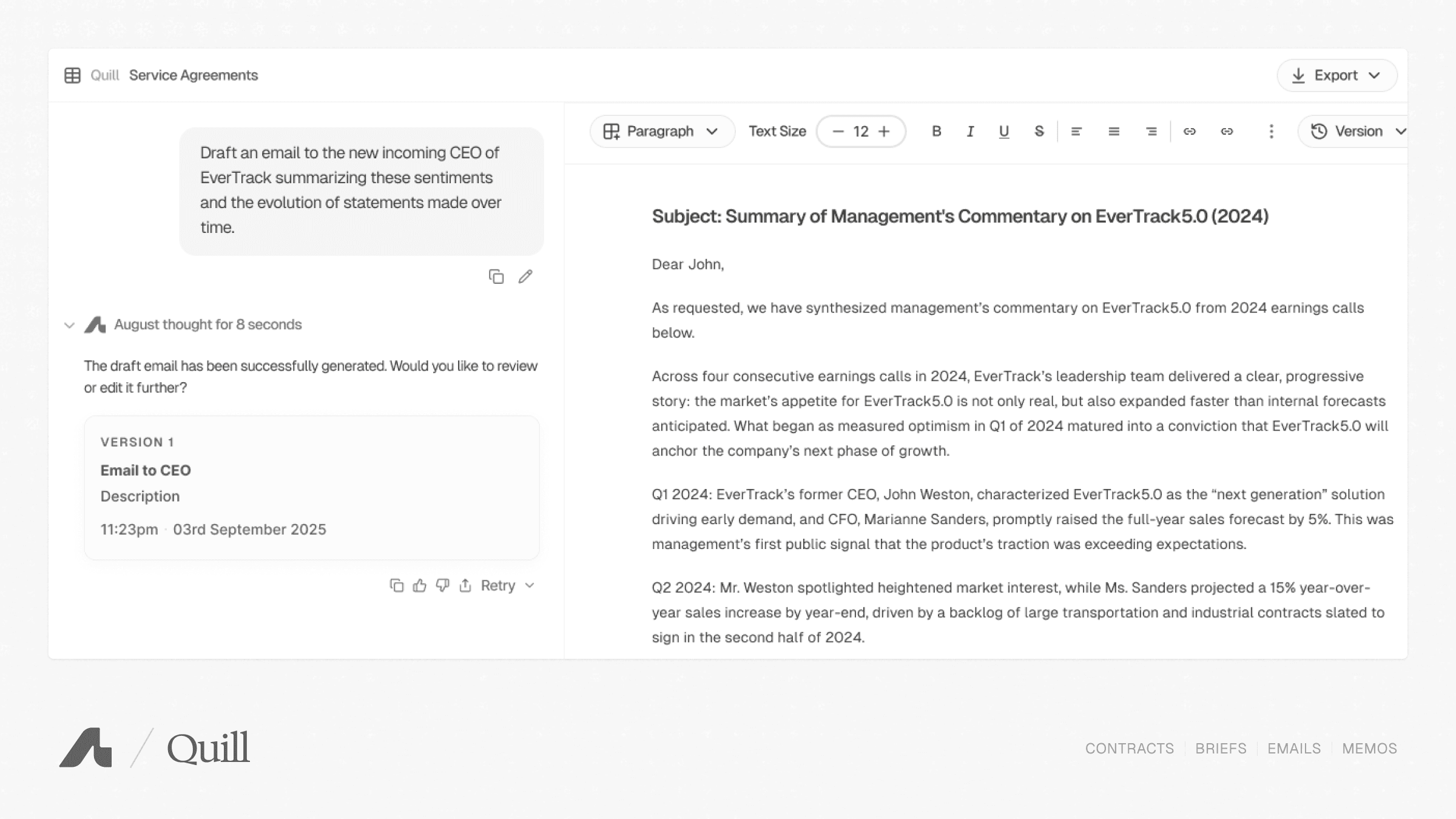
Quill is August's drafting wizard. You can create contracts, briefs, emails, and memos directly in the platform, with August available inside the editor to generate or revise language as you work.
What makes Quill useful:
AI-powered editing. Highlight text and ask August to rewrite, tighten, or expand it. Generate alternative clause formulations. Turn rough notes into polished drafts.
Context-aware assistance. Ask questions about the document you're working on: "What are the termination triggers?" "Are there any undefined terms?" August understands the full document, not just the selection.
Playbook-driven drafting. Apply your clause library and fallback positions directly in Quill. Ask August to conform a draft to your standard form and get explanations of where and why it deviates.
Version comparison. Redline and compare versions, comment, annotate, and track changes without leaving the browser.
Word interoperability. Import from Word, work in Quill, export back to .docx. Move between environments without losing formatting or context.
For lawyers who want to draft and iterate quickly before circulating a document externally, Quill keeps everything in one place.
From One-Off Tasks to Repeatable Systems
Individual features are useful. But the real leverage comes when you can chain them together and run them without thinking.
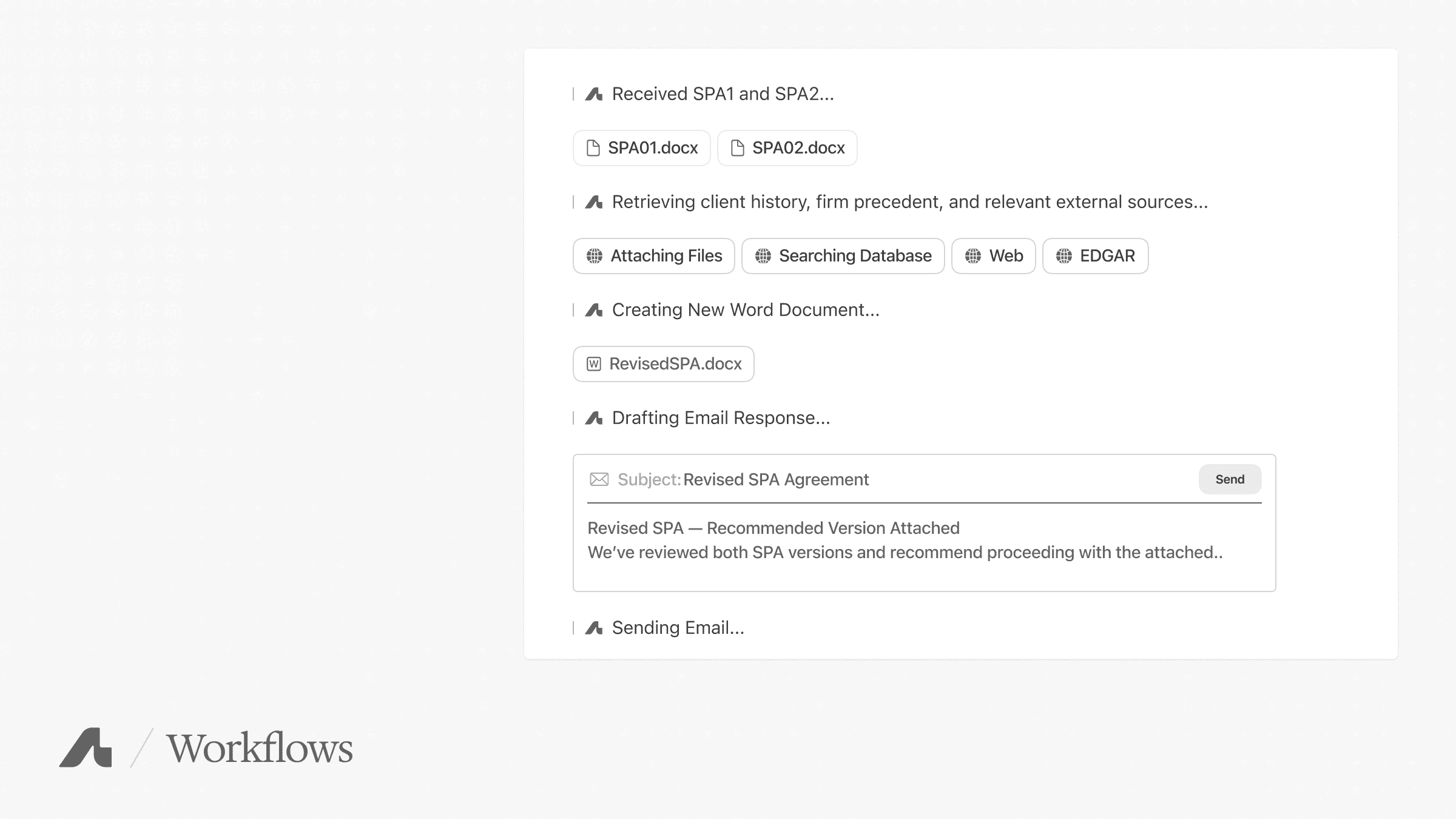
Workflow Mode lets you run complex, multi-step legal tasks in a consistent, repeatable way instead of as ad hoc chats. It uses predefined playbooks so standard processes (like contract review or diligence) follow the same logic and structure every time. You can chain steps together (for example: extract terms → flag issues → propose edits → draft summary) to reduce manual work. Inputs and outputs are controlled, so you can require specific uploads or fields and get standardized formats like tables, issue lists, or memos. It effectively encodes your team’s preferred approach so anyone can run tasks “your way.”
Agent Mode simplifies the experience for users who don't want to pick between modes. Describe what you need; August figures out whether to research, draft, analyze, or some combination. It routes to the right approach automatically.
Playbooks: Capturing What Your Firm Already Knows
Every firm has institutional knowledge. Preferred language for limitation of liability clauses. Fallback positions on indemnification. Client-specific risk tolerances refined over hundreds of deals.
This knowledge usually lives in partners' heads or scattered across old redlines. Playbooks capture it and apply it automatically during review. When you run a Playbook on a contract, August labels each clause as acceptable, needs review, or not acceptable, and can propose suggested edits or fallback language based on your standards.
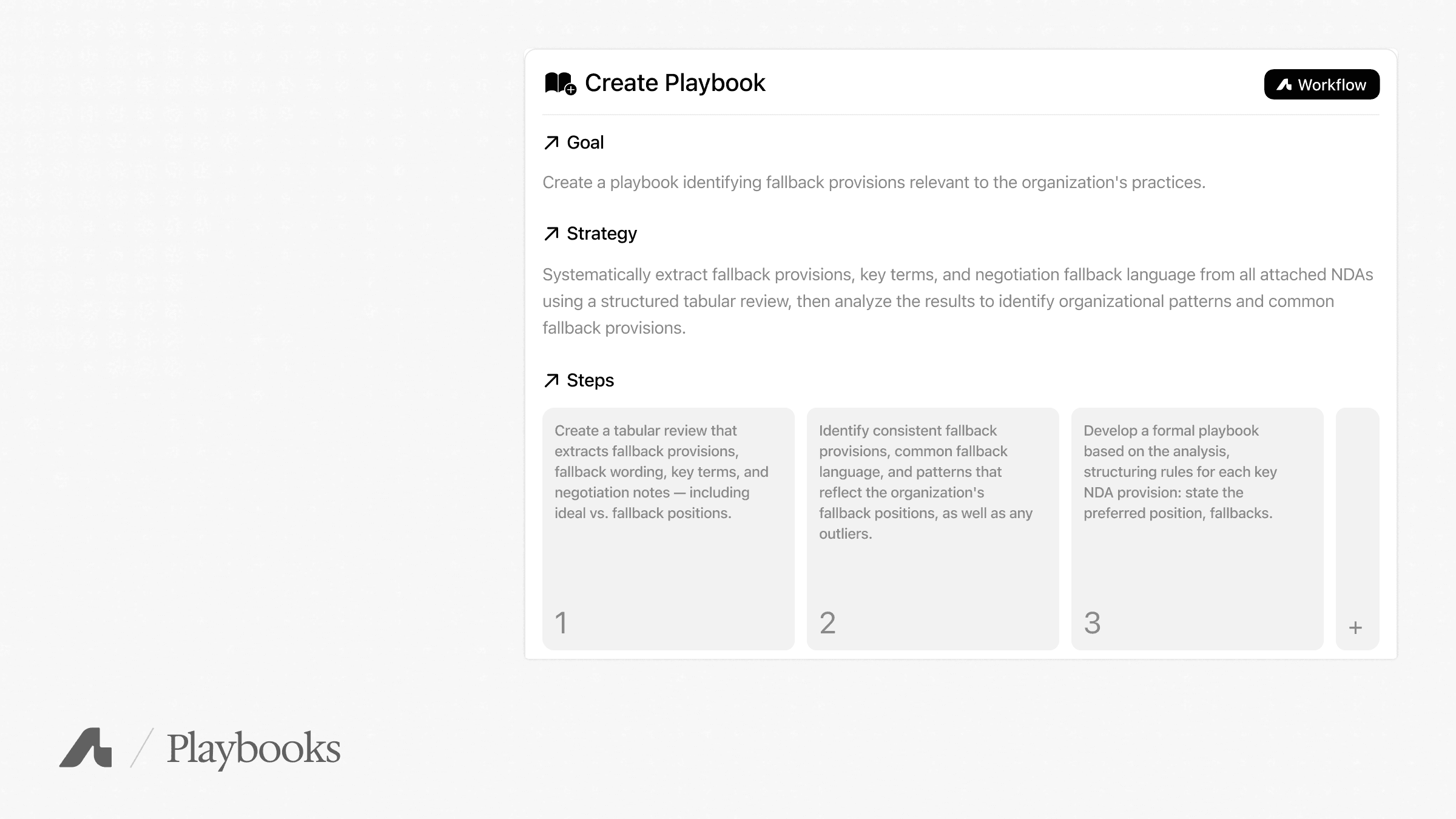
We are leading legal AI in ease-of-use for building and creating Playbooks. You can use August to build them three quick ways:
From scratch. Define rules manually and add your preferred clause language.
From an existing playbook. Upload a Word document or template and convert it into structured rules.
From precedent contracts. Use the Create a Playbook workflow to extract rules from one or more model contracts. Upload your firm's standard form, review the rules August extracts, then optionally add negotiated contracts to detect clause variations and generate fallback positions.
We also added sharing and permissions controls so firms can maintain separate Playbooks for different practice areas, with governance over who can create, edit, or export them.
Tabular Review: Making Large-Scale Analysis Interactive
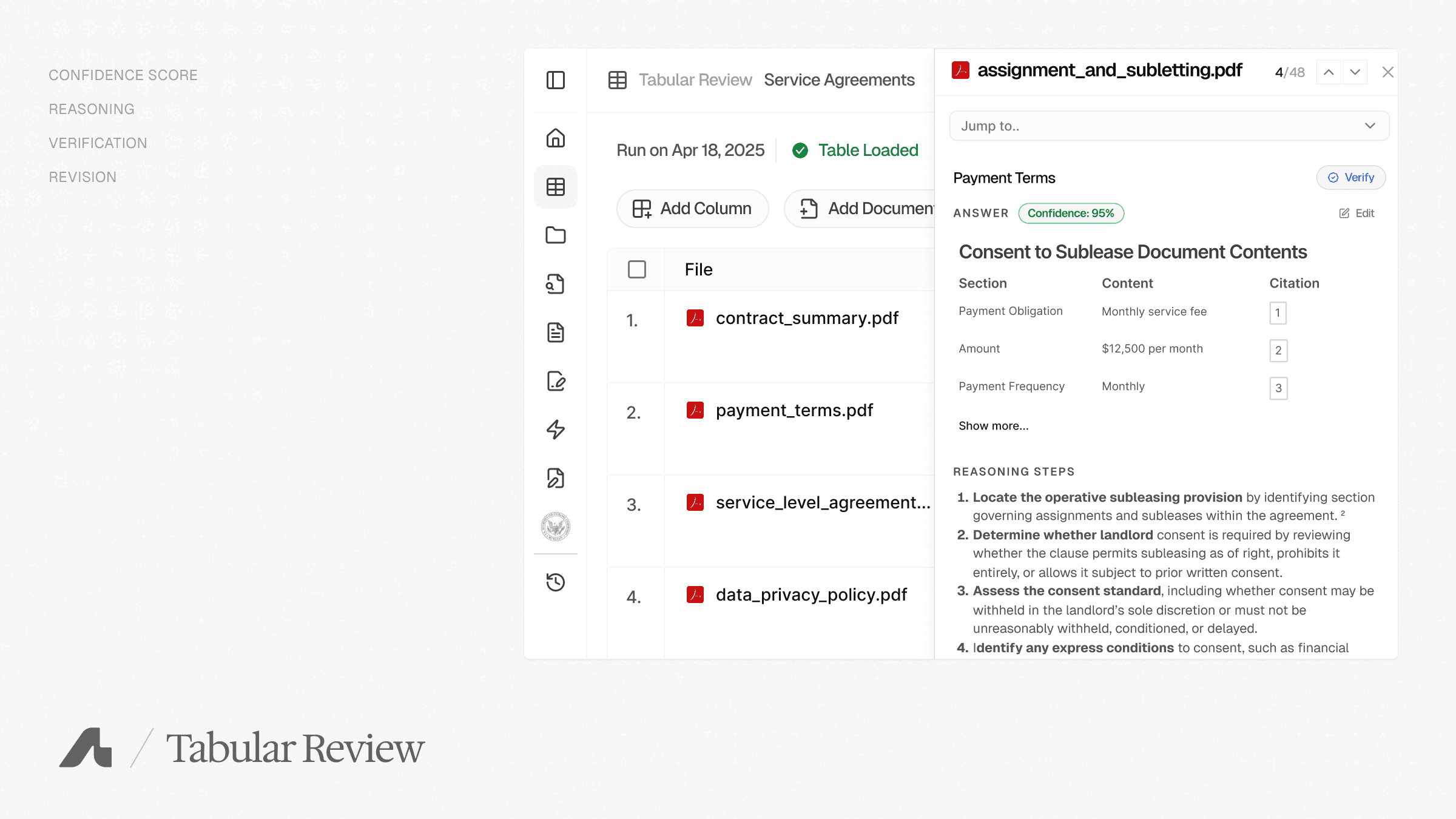
When you're reviewing dozens of contracts, you need structured output. Tabular Review extracts information across documents and presents it in a sortable, filterable grid.
This year we made those grids interactive. You can now chat directly with a review: "Which contracts have uncapped indemnities?" "Show all leases expiring in 2026." Full Text view shows entire clauses without clicking into each cell. Inline editing lets you modify extracted content directly. Conditional columns, pinning, and resizing handle the details that make large reviews manageable.
Deep Research: Thorough, Multi-Step Investigations
Most legal AI handles simple queries well. But complex matters require more: multi-document synthesis, cross-referencing across sources, and outputs that cite their evidence.
Deep Research is August's advanced research mode, designed for exactly this. It moves beyond brief summaries or clause extraction to support fact gathering, cross-document comparison, risk assessment, and comprehensive analysis across large sets of materials.
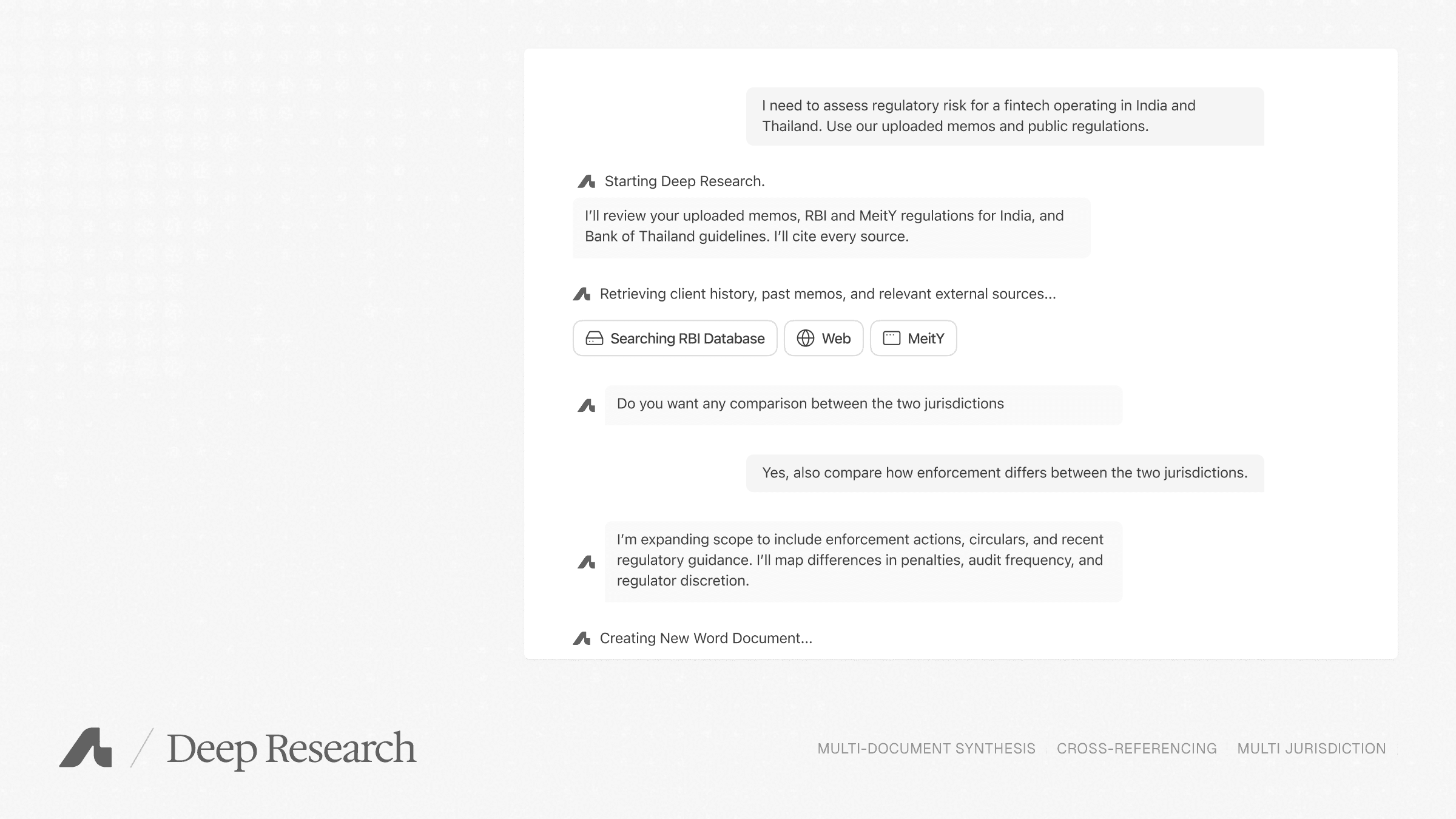
How it works: instead of running a single search, Deep Research iteratively identifies relevant documents, refines its approach, and expands coverage to ensure completeness. It can review internal content, integrated repositories, regulatory sources, and uploaded documents. All findings include citations to the original source material.
Typical use cases include large-scale due diligence, litigation fact pattern analysis, regulatory mapping, internal audits, and complex legal research across jurisdictions.
We also expanded August's legal research sources to include India and Southeast Asia (including Thailand). For firms with cross-border practices, this means research that spans a much wider set of jurisdictions from a single interface.
Everything Else
A few more capabilities that shipped in 2025:
Audio transcription. Upload .mp4 or .wav files. August transcribes them, and citations link back so you can play the original clip. You can ask any question about the transcript, a particularly helpful use case in deposition-related work.
Translation. Translate documents directly in the Assistant, or translate entire folders at once. We now support hundreds of pages in a single pass.
Folder uploads. You can upload entire folders, not just files or .zips.
Subfolders. Organize matters with nested structures that mirror your client-matter hierarchy.
New Assistant interface. We rebuilt the Assistant with a cleaner layout, moved the prompt library for easier access, and added voice mode so you can speak instructions directly.
Why This Matters
Shipping fast isn't about feature count. Each capability we build makes the next one more powerful.
The Word Add-in becomes more useful when Playbooks exist. Playbooks become more useful when you can create them from SharePoint documents. SharePoint search becomes more useful when it feeds into scheduled workflows. Deep Research becomes more useful when it can pull from your firm's repositories and apply your Playbooks to the analysis. The integrations reinforce each other.
A year ago, we were three people with a thesis about how legal AI should work. Now we're a mission driven team, serving firms across four continents, with a platform that's starting to fulfill that thesis.
2025 was the year we built the foundation, and 2026 is the year we build on top of it.